Introduction
Have you wondered how to involve your family in household repairs in a collaborative, educational and efficient way? Solidarity and teamwork can make domestic tasks not only faster and more effective, but also an opportunity to learn new skills and strengthen family ties. In this article, you will discover useful tips to encourage the active participation of all in household maintenance, promoting collaboration, education and efficiency.
History and Background
Throughout history, household maintenance has been a shared responsibility of families. Since the time of our ancestors, survival and well-being have been based on collaborative work, where knowledge transmission has been crucial.
At present, the participation of all family members in household repairs not only promotes a shared sense of responsibility, but also represents an opportunity to educate the youngest in practical skills that will be valuable throughout their lives.
Detailed Analysis
Benefits of Family Partnership
Family collaboration not only accelerates household repair and maintenance tasks, but also fosters the spirit of equipment and solidarity. Active participation of all members creates an environment of mutual support and strengthens family ties, generating a sense of belonging and equity in domestic responsibilities.
Challenges and Solutions
Although family collaboration can lead to challenges in terms of coordination and assignment of tasks, effective strategies exist to overcome them. Establishing clear roles, fostering open communication and recognizing individual achievements are some of the keys to ensuring harmonious and efficient collaboration in household repairs.
Current trends
The concept of "do it yourself" has gained popularity in recent years, promoting greater participation of families in the repair and maintenance of the home. Accessibility to online resources, tutorials and practical advice has empowered families to take on tasks that could have previously been delegated to professionals.
Comprehensive review
Home Practices
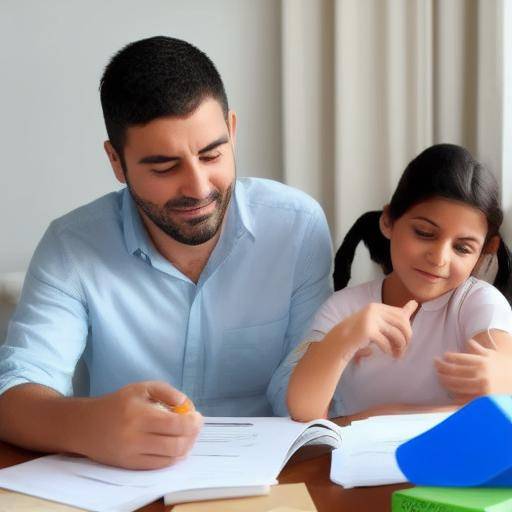
From simple tasks such as changing a tap to more ambitious projects such as renewing a space, home repairs are an opportunity to promote practical education. Involving children actively in these activities gives them the opportunity to acquire technical skills, promoting experiential learning and developing problem solving.
Efficient Partnership Tips
Establishing a regular schedule for household tasks, assigning responsibilities in line with the skills and capacities of each family member, and recognizing individual achievements are effective strategies to ensure efficient and equitable collaboration.
Home experts
The experience of professionals specializing in home repairs can be invaluable. Inviting an expert to share his knowledge and give practical advice to the family not only improves the level of education at home, but also provides an external perspective that enriches the learning process.
Comparative analysis
Collaboration, education and efficiency are interconnected elements in household repairs. Collaboration fosters education, as it involves all members in the learning process. In turn, education promotes efficiency by equating the family with the skills and knowledge necessary to face domestic tasks more effectively.
Practical Tips and Accessible Tips
Organization and Planning
Establishing a detailed plan for each task, assigning specific roles and times, and providing the necessary materials in advance are key strategies to ensure that household repairs are carried out efficiently and orderly.
Continuous learning
Promoting curiosity and the desire to learn in each task, explaining the processes involved and encouraging questions, helps to promote continuing education at home.
Ideas of Experts and Industry Information
Prospectives
According to domestic repair experts, family involvement in household chores not only has practical benefits, but also strengthens family ties and promotes a sense of community.
Future Prognostics
Current trends aim at greater integration of family participation in household repairs, with an approach to developing practical skills and promoting values such as teamwork and shared responsibility.
Case Studies and Real Life Applications
Bricolage renovations
Families from different parts of the world have addressed DIY renovation projects, transforming spaces into their homes while involving all members in the process, creating lasting memories and learning practical skills.
Home maintenance
Regular household maintenance, from garden care to household appliances repair, has proven to be an opportunity for families to join in practical tasks, promoting collaboration and continuous learning.
Future Trends and Predictions
Innovations at the Home
Technology is expected to play an increasingly important role in household repairs, offering smart solutions that can be understood and used by the whole family, ensuring an educational and efficient approach to domestic work.
Conclusion
Promoting family participation in household repairs is a way of fostering collaboration, education and efficiency, creating an environment in which all members can learn, grow and contribute significantly. By following practical advice and fostering a positive attitude towards teamwork, the home becomes a space of continuous learning and joint realization.
Frequently asked questions
How can I involve my family in home repairs if they have little experience?
Start with simple tasks and provide clear instructions, with emphasis on step-by-step learning, can be beneficial. Starting with activities such as painting or basic maintenance allows them to gain confidence and acquire essential skills.
What benefits can family participation bring in long-term household repairs?
Participation in household repairs promotes practical skills, fosters shared responsibility and strengthens family ties. In the long term, this can be translated into a greater sense of independence and satisfaction for all family members.
How can I motivate the youngest to participate in home repairs?
Encouraging curiosity and interest in learning through a positive narrative on learning and developing practical skills can be an effective strategy. Demonstrate the value and usefulness of learned skills can be an additional source of motivation.
What is the best way to assign home repair tasks?
Considering the individual skills and preferences of each family member is key. Assigning tasks consistent with these capabilities and showing recognition for individual efforts can improve efficiency and satisfaction in the process.
What role can education play in household repairs?
Domestic education not only involves acquiring practical skills, but also fostering an analytical approach and problem-solving capacity. This preparation provides family members with the necessary confidence and competence to effectively manage household repairs.
What aspects of family collaboration in household repairs can benefit the entire family?
Fostering family collaboration in household repairs can result in an equitable distribution of responsibilities, strengthening family ties and providing a shared sense of achievement. In addition, it can be an opportunity for all members to learn new skills and develop a deeper understanding of various domestic tasks.
These tips and strategies can help you effectively involve your family in home repairs, creating a collaborative learning environment and promoting efficiency in household work.
Conclusion
Home repairs provide an excellent opportunity to foster collaboration, education and family efficiency. Working together on household tasks, strengthening family ties, promoting practical learning and achieving greater efficiency in household work. By following these tips and strategies, you can effectively involve your family, creating a harmonious and educational environment in the home. Encourage yourself to teamwork and discover that home repairs can become an enriching experience for the whole family!
It recalls that collaboration, education and efficiency are fundamental pillars for a connected and harmonious home.