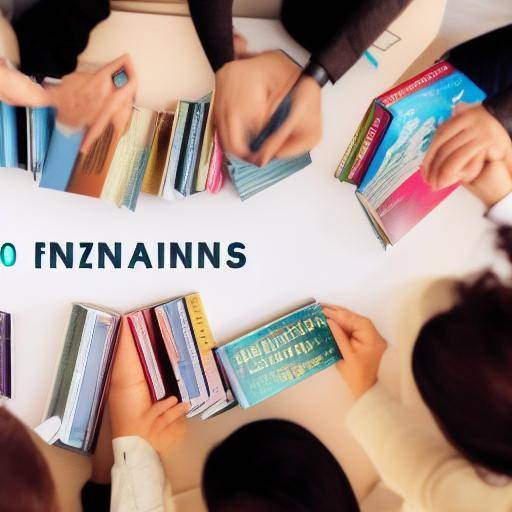
Financial literacy is a crucial skill in today's society. With the ability to effectively understand and manage money, people can make informed decisions, plan for the future and avoid financial problems. In this article, we will explore how reading books can be a powerful tool for improving financial literacy, providing valuable knowledge and promoting continuous learning.
Introduction
Reading is an inexhaustible source of knowledge, and when it applies to personal finance, it can make a big difference in people's lives. Through the information and perspectives presented in books, you can acquire financial skills, understand key concepts and learn strategies to manage and grow money. In this article, we will explore practical advice on improving financial literacy through reading, highlighting the importance of knowledge and continuous learning in the financial sphere.
History and Background
The relationship between reading and financial literacy has profound historical roots. Since ancient times, the transmission of financial knowledge through writing has been fundamental to economic and social progress. Over the centuries, the role of books in disseminating information on investment, savings, budget management and other financial aspects has been crucial.
In the eighteenth century, with the advent of printing and the democratization of education, there was a significant increase in the publication of works related to personal finance. This period marked the beginning of greater accessibility to financial information, which in turn contributed to a better understanding and mastery of financial skills.
The impact of financial literature on modern society is undeniable. Books specialized in financial education have gained popularity and play a vital role in promoting global financial literacy.
Detailed Analysis
Benefits of Reading in Financial Literacy
The reading of books on financial education offers a wide range of benefits. Some of these include:
- Extension of knowledge on fundamental financial concepts.
- Development of skills for money management, investment and long-term financial planning.
- Exposure to successful strategies and approaches used by experts in personal finance.
- Increased awareness of financial risks and the importance of prudent management of finance.
The books provide detailed information and concrete examples that enable readers to understand and apply financial concepts in a practical way in their daily lives. In addition, reading promotes critical thinking and informed decision-making in the financial sphere.
Current Challenges and Trends
Despite the obvious benefits, there are also challenges associated with improving financial literacy through reading. In the digital era, where financial information is widely available online, finding reliable and relevant sources can be overwhelming. Readers must discern between sources of authorised information and misleading or biased content.
Furthermore, the speed at which financial markets evolve and regulations make it crucial to keep up with the latest trends and developments. Books, though solid in fundamental concepts, often do not cover the speed of change in the current financial world.
Comprehensive review
Practices and Best Practices
The reading of books on financial education can be complemented by practices such as participation in discussion groups, attendance at seminars or consultation of financial advisers. Combining theory with practice is essential for a complete understanding and effective implementation of the learned financial strategies.
Perspectives of Future Experts and Tndences
The latest trends in financial education are aimed at integrating technology. Digital platforms and mobile applications provide immediate access to financial management tools, investment simulators and interactive educational content. This evolution transforms the way people access and absorb financial knowledge, providing a more dynamic and personalized experience.
Comparative analysis
The comparison between books, knowledge and learning in the field of financial literacy reveals the complementarity of these aspects. Books provide a solid basis for financial knowledge, knowledge provides understanding and discernment, and continuous learning promotes the practical application of financial skills.
Practical Tips and Accessible Tips
Tips to Improve Financial Literacy Through Reading
- Featured Books: Search for titles recommended by personal finance experts and quality reviews. Prioritize works that address specific issues relevant to your financial needs.
- Critical reading: It evaluates the reliability of sources and actively questions the information presented in books. Look for works that support the findings with verifiable data and solid analysis.
- Practical application: Transfer of knowledge acquired to real situations. Find opportunities to implement learned financial strategies and evaluate their results.
- Diversification: Expand your financial library including books that address both classic concepts and new trends in personal finance.
Accessible Tips for Effective Financial Learning
- Establish clear and realistic financial targets. Use reading as a tool to develop concrete plans that bring you closer to your goals.
- It creates an enabling environment for financial training. Dedicates daily time to reading and learning, and seeks a quiet space and without distractions.
- It interacts with other financial education enthusiasts, either online or local events. Sharing perspectives and experiences can enrich your understanding and motivation.
Perspectives and Opinions of Experts in the Industry
Interviews with Experts
In an interview with the renowned financial advisor, Alejandro Rodriguez, shared his vision of the importance of reading in the development of financial skills: "Books are an invaluable tool for those seeking to improve their financial literacy. The variety of perspectives and approaches presented in the books offers readers the opportunity to find strategies that align themselves with their financial objectives and personal values. "
Case Studies and Practical Applications
Case Study: Application of Investment Strategies Learned in a Book
Maria, a lively reader of financial content, applied the investment strategies learned in a specialized book to diversify her portfolio. It exploited new markets and achieved superior performance, demonstrating the effectiveness of financial education through reading in successful financial decision-making.
Future Trends and Predictions
Predictions for Financial Literacy Evolution
Industry experts predict that technological development will continue to transform the way people access financial information. Gamification and personalization will be key aspects of financial education, providing more attractive and effective learning experiences for people of all ages.
Conclusion
Reading books is a powerful tool for improving financial literacy, providing critical knowledge and valuable insights on personal financial management. By incorporating practical advice and adopting active learning strategies, readers can transform knowledge acquired into concrete actions that enrich their long-term financial well-being.
Frequently asked questions
How can I select the best books to improve my financial literacy?
The selection of books to improve financial literacy means considering several important guidelines. Find titles recommended by personal finance experts and quality reviews. Prioritize works that address specific issues relevant to your financial needs. It is also useful to look for books that support your findings with verifiable data and solid analysis. Diversifying your financial library with books that address both classic concepts and new trends in personal finance can provide a balanced and up-to-date perspective.
How can I apply the financial knowledge gained through reading in my daily life?
The practical application of the knowledge gained through reading is critical to consolidating financial literacy. Transfer the concepts learned to real situations in your financial life. Find opportunities to implement learned financial strategies and evaluate their results. Establish clear and realistic financial goals and use reading as a tool to develop concrete plans that bring you closer to those goals. In addition, interact with other passionate about financial education, whether online or at local events, to share perspectives and experiences that enrich your understanding and motivation.
How can I keep up with the latest financial trends through reading?
Reading is a valuable tool to keep up with the latest financial trends. It is important to explore books that address both solid concepts and new trends in personal finance. In addition, complementing reading with online resources, financial blogs, and following social media experts can provide up-to-date insights on trends and developments in the financial world. Also consider attending seminars or courses related to the latest financial trends to keep your knowledge up-to-date and relevant.
How can I discern between reliable sources of financial information and misleading content?
Discerning between reliable sources of financial information and misleading content is essential in the digital era. When selecting books and resources online, it evaluates the reliability of sources and actively questions the information presented. Look for works that support your findings with verifiable data and solid analysis. It also considers consulting the author's reputation or publication, and seeks recommendations from reliable sources in the financial industry. Participation in online financial communities can also provide additional perspectives on the reliability of information sources.