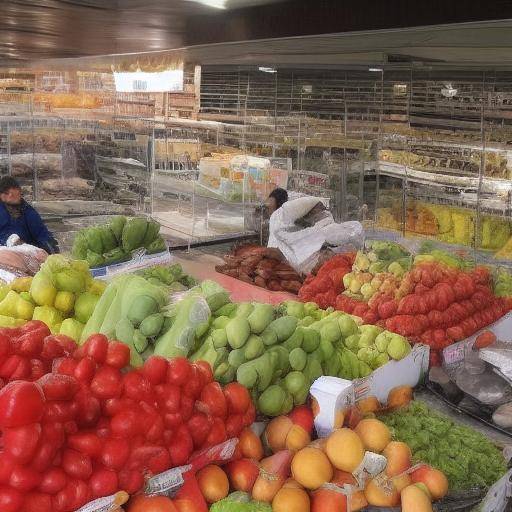
Urban agriculture has gained a leading role in recent years as an innovative way to promote the sustainability, efficiency and future of our communities. With the increase in urban populations, agriculture in cities has become an alternative to ensuring a more sustainable and economic life. In this article, we will explore in detail the impact of urban agriculture on these key aspects, as well as its innovation, efficiency and future projections.
Introduction
Urban agriculture has positioned itself as a fundamental pillar in the search for sustainable alternatives to feed growing urban populations. This phenomenon has gained relevance for its potential to transform not only the way we produce food, but also our cities and communities. In this article, we will explore how urban agriculture has a positive impact on the sustainability and economy of cities, as well as its efficiency and innovation, while we will analyze its future projection.
History and Background
The practice of agriculture in urban environments has deep historical roots, dating back to ancient civilizations that developed cultivation systems within cities. Since then, urban agriculture has experienced significant evolution, adapting to social, technological and environmental changes. The emergence of movements such as modern urban agriculture at the end of the 20th century has marked a turning point in its development, promoting cultivation in small spaces using innovative and sustainable techniques.
Deep analysis
Urban agriculture offers a number of tangible benefits in terms of sustainability, efficiency and economy. A recent study revealed that local food production in urban environments can significantly reduce the carbon footprint related to the transport and storage of food products. In addition, the implementation of vertical farming methods and the use of innovative technologies maximize crop yields, optimizing the use of limited resources such as water and soil.
Comprehensive review
In analysing the impact of urban agriculture on sustainability and the economy, it is essential to consider best practices and case studies that demonstrate their effectiveness in different contexts. The implementation of community urban orchards has proven to be an effective strategy to strengthen food security, reduce dependence on imported food and promote social cohesion in diversified urban environments.
Comparative analysis
When we compare the innovation, efficiency and future development of urban agriculture with conventional methods, significant differences arise. While small-scale agriculture in urban areas may require new forms of management and adapted technologies, its long-term impact on sustainability and the economy is undeniable.
Practical Tips and Accessible Tips
If you are interested in embarking on urban farming projects, here are some practical tips to start:
- Investigate local regulations and seek support from community organizations.
- Start with simple and adaptable crops to reduced spaces.
- Consider implementing efficient irrigation systems to optimize water use.
Industry Perspectives and Expert Reviews
According to Dr. José Aguilar, an expert in urban agriculture, "Innovation and the constant adaptation of sustainable technologies are critical to ensuring the long-term success of urban agriculture in constantly changing urban environments." This vision reflects the importance of a proactive perspective and the constant evolution in urban agriculture to address future challenges.
Case Studies and Real Life Applications
An outstanding example of innovative urban agriculture is the project "Sustainable Vertical Gardens", which uses hydroponic cultivation technologies to maximize the use of space and reduce water consumption. This approach has proven to be highly efficient and sustainable, offering a replicable model in densely populated urban environments.
Future Trends and Predictions
As urban agriculture continues to evolve, new trends and developments are expected to revolutionize the way cities address food cultivation. The integration of vertical agriculture into urban buildings, the development of automated farming systems and the implementation of innovative agroecological methods represent only some of the trends that define the future of urban agriculture.
Conclusion
In short, urban agriculture has a significant impact on the sustainability, efficiency and economy of cities, its constant innovation guarantees its relevance in a constantly changing world. From the reduction of the ecological footprint to the promotion of local food security, urban agriculture is essential for the development of resilient and sustainable communities.
FAQs
What are the main challenges of implementing urban agriculture?
The limitation of spaces, the proper management of water and the adaptation of farming methods are the main challenges facing urban agriculture.
How can we encourage community participation in urban agriculture projects?
The creation of community gardens, the development of educational programmes and the promotion of agriculture in schools and community centres are effective strategies for fostering community participation.
What role do sustainable technologies play in urban agriculture?
Sustainable technologies, such as hydroponics and vertical agriculture, are critical to maximizing crop efficiency and yield in urban environments.
What are the economic benefits of urban agriculture?
Urban agriculture can reduce costs related to food transport, create local employment opportunities and increase the availability of fresh products at affordable prices.
What is the potential of urban agriculture to combat hunger and malnutrition?
Urban agriculture provides a way to improve food security, especially in disadvantaged communities, by providing access to fresh and nutritious food.
How can urban agriculture contribute to climate change mitigation?
By reducing the carbon footprint associated with food transport, urban agriculture can contribute significantly to climate change mitigation and the promotion of more sustainable communities.
With appropriate planning and commitment, urban agriculture has the potential to transform our cities into more sustainable, inclusive and prosperous spaces for present and future generations.
External resources
- FAO – Urban and peri-urban agriculture
- World Bank – Sustainable urban agriculture
- Innovation in urban agriculture
Through innovation, efficiency and a future-centred approach, urban agriculture is playing a vital role in the development of sustainable communities around the world. Its positive impact on the sustainability and economy of cities places urban agriculture as a key pillar in addressing the food and environmental challenges of the twenty-first century.