Today, minimalism has become a very popular lifestyle that transcends beyond the mere aesthetic. This approach has infiltrated the decoration of the home, and rightly. Minimalism not only brings a sense of simplicity and order, but can also be an excellent way to save money by decorating with elegance. In this article, we will explore in depth the impact of minimalism on decoration with little budget, focusing on aspects of simplicity, savings and order.
Introduction
Minimalism has become a cultural phenomenon in response to visual and mental saturation, driving people to seek simplicity and functionality. This movement is not only limited to decoration, but it drives a change of mind towards adoption of less to get more. In this context, minimalism in low-budget decoration is not only a trend, but also a need for many.
History and Background
The minimalism in decoration has its roots in artistic and architectural movements of the twentieth century, such as modernism and the Bauhaus. The philosophy of "less is more" has evolved over time, influencing styles of decoration such as Scandinavian, Japanese and contemporary. These styles are characterized by their emphasis on functionality, the absence of unnecessary elements and harmony with the environment.
Analysis in Deep
Minimalism in decoration entails a number of benefits, such as reducing visual stress, fostering creativity and promoting a sustainable lifestyle. However, it also poses challenges, especially in the careful selection of elements to avoid monotony. At present, there is a growing trend towards minimalist decoration, with an emphasis on material reuse and space optimization in small households.
Comprehensive review
The application of minimalism in low-budget decoration presents numerous creative possibilities, from the reorganization of existing furniture to the incorporation of multifunctional elements. Although minimalism can be perceived as a limitation, it actually offers greater freedom in the choice of elements that actually contribute aesthetic and functional value.
Comparative analysis
Simplicity, savings and order are fundamental pillars of minimalism in the decoration with little budget. Simplicity is reflected in the careful selection of elements that transmit calm and harmony, saving is materialized in the choice of durable products and optimization of resources, and the order involves maintaining spaces free of visual and physical disorder.
Practical Tips and Accessible Tips
To apply minimalism in low-budget decoration, it is important to consider the choice of multifunctional furniture, the reuse of existing elements, the elimination of unnecessary objects and the incorporation of plants and natural elements. These tips not only contribute to minimalist aesthetics, but also promote a more peaceful and balanced environment.
Industry Perspectives and Expert Reviews
Experts in interior decoration and design agree that minimalism involves a paradigm shift that transcends passing trends. This philosophy of life seeks to harmonize aesthetics with functionality, fostering a more conscious and sustainable lifestyle.
Case Studies and Applications in Real Life
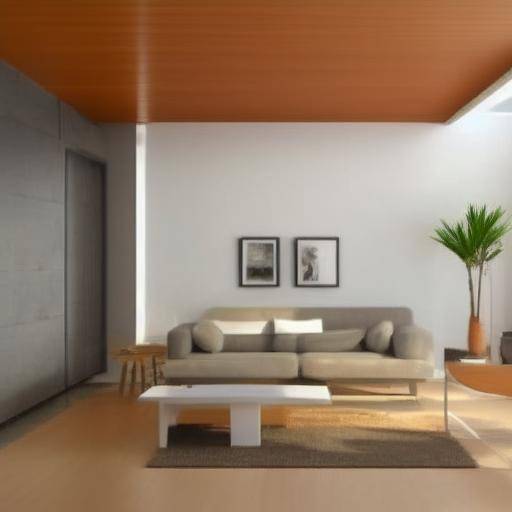
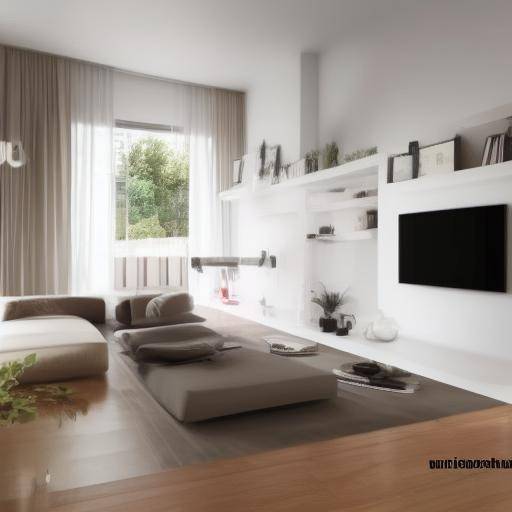
The adoption of minimalism in the decoration with little budget has shown to provide brighter, spacious and welcoming spaces. Real cases have shown that the reduction of unnecessary elements and the careful organization of spaces can completely transform the perception of an environment, even in spaces with budget limitations.
Future Trends and Predictions
Minimalism in decoration is expected to continue to gain relevance in the coming years, as more people seek to simplify their lives and homes. The new trends will focus on the integration of natural elements and the maximization of space into small homes, without sacrificing aesthetics or comfort.
Conclusions
The adoption of minimalism in low-budget decoration offers multiple benefits, from stress reduction to long-term economic savings. By prioritizing simplicity, savings and order, it is possible to achieve a welcoming, functional and elegant environment, without the need for large investments.
Frequently asked questions
Is minimalism in decoration necessarily a cold and personalityless aesthetic?
No, minimalism can adapt to different styles and tastes, allowing the incorporation of elements that reflect the personality of the inhabitant. The key is in careful selection of significant elements that provide aesthetic and emotional value.
Is it possible to apply minimalism in small spaces without sacrificing functionality?
Yes, minimalism is based on space optimization and the elimination of superfluous elements, which can be especially beneficial in reduced spaces. The choice of multifunctional furniture and creative storage solutions can maximize functionality without overloading the environment.
Does minimalism in decoration necessarily imply giving up ornamentation and decoration?
Not necessarily. While minimalism promotes the reduction of unnecessary decorative elements, it does not imply giving up ornamentation. The key is in the selection of significant elements and the balanced layout of the decoration, avoiding visual saturation.
Does the minimalism in the decoration entail a high investment in furniture and accessories?
Not necessarily. Minimalism promotes the choice of quality furniture that lasts in time, which in the long term can involve significant savings by avoiding frequent replacements. In addition, reuse and restoration of existing elements are practices compatible with the minimalist approach.
Is minimalism only applicable to a specific style of decoration?
No, minimalism can be incorporated in various styles of decoration, from Scandinavian to industrial. More than a style in itself, minimalism is a philosophy that can adapt to different aesthetic preferences, provided simplicity, savings and order are prioritized.
Is minimalism in low-budget decoration a temporary tendency or a lasting philosophy?
Minimalism goes beyond a passing trend, as it promotes a change of mind towards simplification and sustainability. As a philosophy of life, minimalism in low-budget decoration is a practice that remains relevant in time, adapting to changing needs.
In short, the impact of minimalism on low-budget decoration lies in its ability to transform spaces, promote efficiency in resource use and foster a more conscious lifestyle. By prioritizing simplicity, savings and order, it is possible to create welcoming and elegant environments, regardless of the available budget. The adoption of this approach not only results in an attractive aesthetic, but also in a more balanced and sustainable lifestyle.